

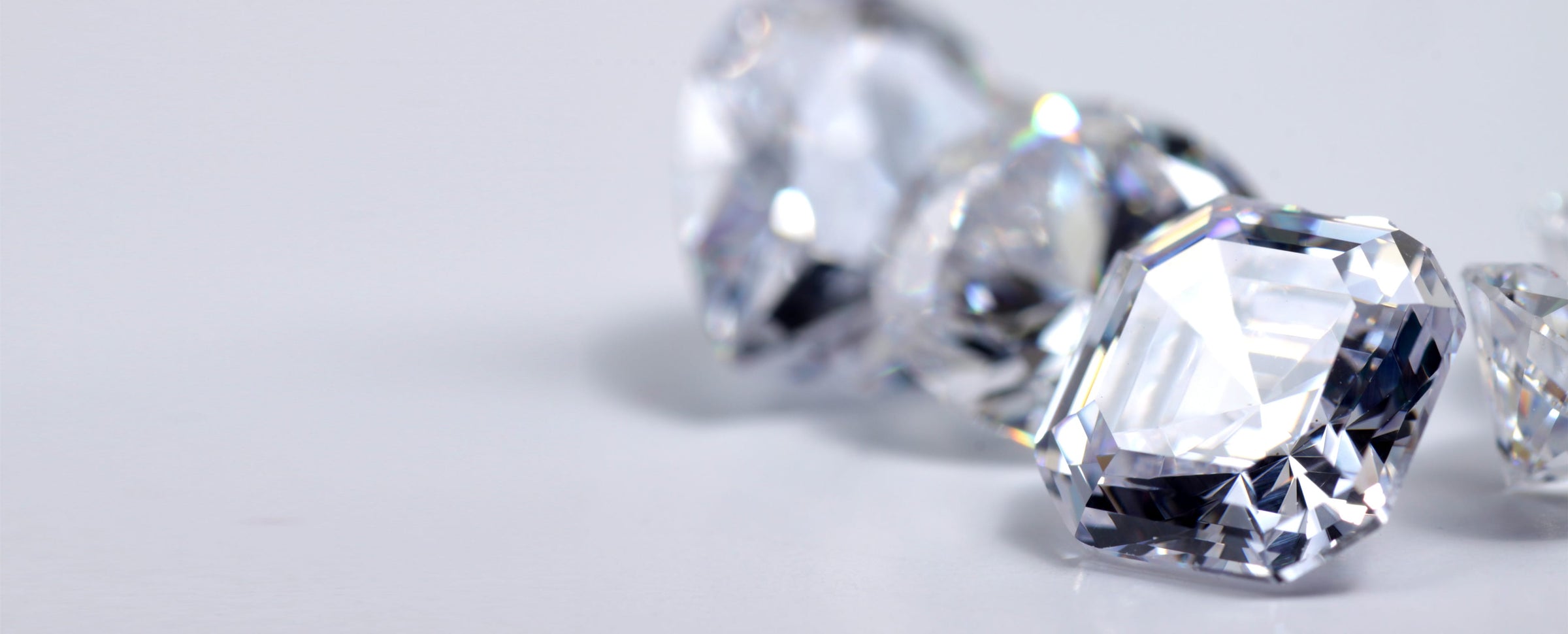
Diamond Education
Understanding Diamonds: The 4Cs
Every diamond is unique. The industry standard for evaluating a diamond’s quality is the 4Cs — Cut, Color, Clarity, and Carat Weight. Understanding these four characteristics will help you choose a stone that fits both your style and your budget.
Cut
Cut is widely considered the most important of the 4Cs because it determines how a diamond interacts with light. A well-cut diamond reflects light internally from one facet to another, then disperses it through the top, creating the brilliance and sparkle you see.
Cut grades range from Excellent to Poor. We recommend prioritizing cut quality above all else — a well-cut diamond with slightly lower color or clarity will often look more impressive than a poorly cut stone with perfect grades on paper.
Color
Diamond color actually refers to the absence of color. The GIA color scale runs from D (colorless) to Z (light yellow or brown). The differences between grades are subtle and often invisible to the untrained eye, especially once a diamond is set in a ring.
- D–F (Colorless): Rare and highly valued. No visible color.
- G–J (Near Colorless): Excellent value. Color is difficult to detect unless compared side-by-side with a colorless stone.
- K–M (Faint): A slight warmth that can complement yellow and rose gold settings beautifully.
Clarity
Clarity measures the presence of internal characteristics (inclusions) and surface blemishes. Nearly all diamonds have some natural imperfections — the question is whether they’re visible without magnification.
- FL–IF (Flawless/Internally Flawless): Extremely rare. No visible inclusions under 10x magnification.
- VVS1–VVS2 (Very, Very Slightly Included): Inclusions are difficult for even a trained gemologist to detect.
- VS1–VS2 (Very Slightly Included): Minor inclusions not visible to the naked eye. A popular choice for balancing quality and value.
- SI1–SI2 (Slightly Included): Inclusions may be visible under magnification but are often not noticeable in everyday wear.
Carat Weight
Carat refers to a diamond’s weight, not its size. One carat equals 200 milligrams. While a larger carat weight generally means a bigger-looking stone, the cut and shape also influence how large a diamond appears face-up.
Keep in mind that carat weight alone doesn’t determine value. A smaller diamond with an excellent cut, high clarity, and great color can be more valuable — and more visually striking — than a larger stone with lower grades.
Natural vs. Lab-Grown Diamonds
At Beyond Two Rings, we offer both natural and lab-grown diamonds. Lab-grown diamonds are chemically, physically, and optically identical to mined diamonds. The difference is their origin — one is formed over billions of years beneath the earth’s surface, the other is created in a controlled laboratory environment in a matter of weeks.
Both are real diamonds. The choice between them comes down to personal preference and budget. Lab-grown diamonds typically offer 30–50% more size for the same investment.
Let Us Help You Choose
Selecting a diamond doesn’t have to be overwhelming. Our team has decades of experience helping customers find the right stone for their style, setting, and budget. Contact us or book an appointment to explore your options in person.